


A used excavator, backhoe loader or concrete mixer can save a contractor lakhs of rupees compared with a new machine. It can also cost far more than a new one if it arrives with a worn engine, leaking hydraulics, a tampered hour meter or an unclear ownership trail.
The difference between a smart purchase and an expensive mistake is almost always inspection. This guide gives you a practical used construction equipment buying checklist with 25 inspection points, a technical inspection table, India-specific documentation checks and a simple method to calculate the real cost of a machine before you pay.
Whether you are a contractor, fleet owner, dealer or first-time buyer, use this guide as a working document and carry it with you when you visit the machine.
Why Inspect Used Construction Equipment Before Buying?
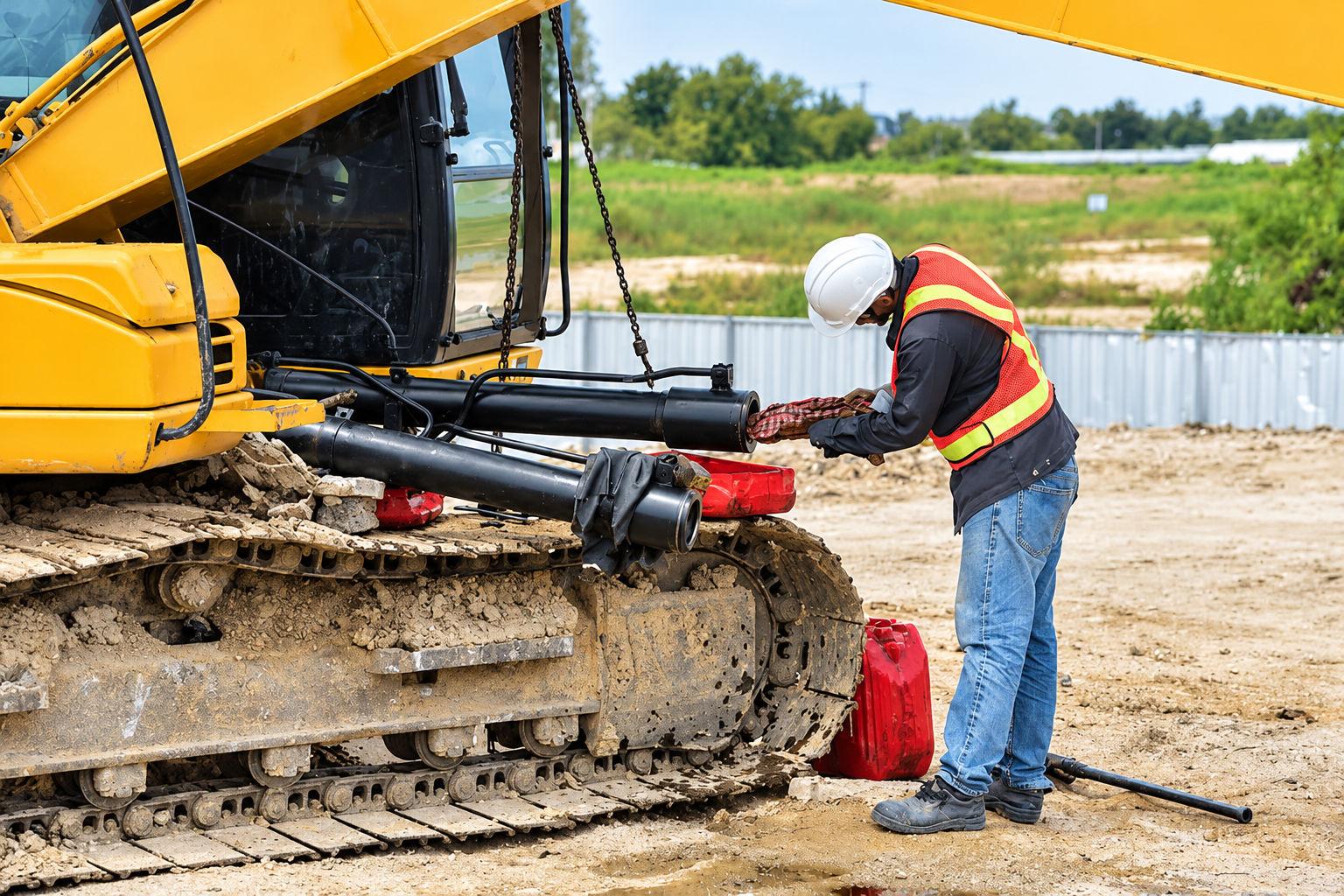
Most buyers of second-hand machinery compare only the asking price and the hour meter. That leaves three important questions unanswered:
- •What is the real mechanical condition? Surface cleaning and fresh paint can hide serious wear.
- •What is the operating history? A machine used in a quarry ages very differently from one used for light site work.
- •Who really owns it? Unclear ownership, unpaid finance or missing paperwork can block transfer and resale.
A structured used construction machinery inspection protects your capital, reduces downtime after purchase and gives you facts to negotiate with. Even a machine with problems can be a good buy if the price reflects the repairs it needs. A machine with hidden problems never is.
Before you visit: carry a torch, a notebook or printed checklist, a camera or phone, gloves, a clean cloth for checking fluids, and if possible, a trusted mechanic or operator who knows the brand.
Quick Technical Inspection Table
Use this table for a fast overview, then follow the detailed sections below.
| Component | What to inspect | Warning signs |
|---|---|---|
| Engine | Oil condition, exhaust smoke, unusual noise | Excessive smoke, oil leakage |
| Hydraulics | Cylinder seals, hoses, hydraulic pressure | Leakage, slow movements |
| Transmission | Gear shifting, response | Jerks, abnormal noise |
| Undercarriage | Track links, rollers, sprockets | Uneven wear |
| Structure | Boom, arm, chassis | Cracks, poor-quality welding |
| Electrical | Wiring, sensors, dashboard | Warning lights, malfunction |
| Hour meter | Operating hours and records | Inconsistent readings |
1. Check the Machine's Operating Hours
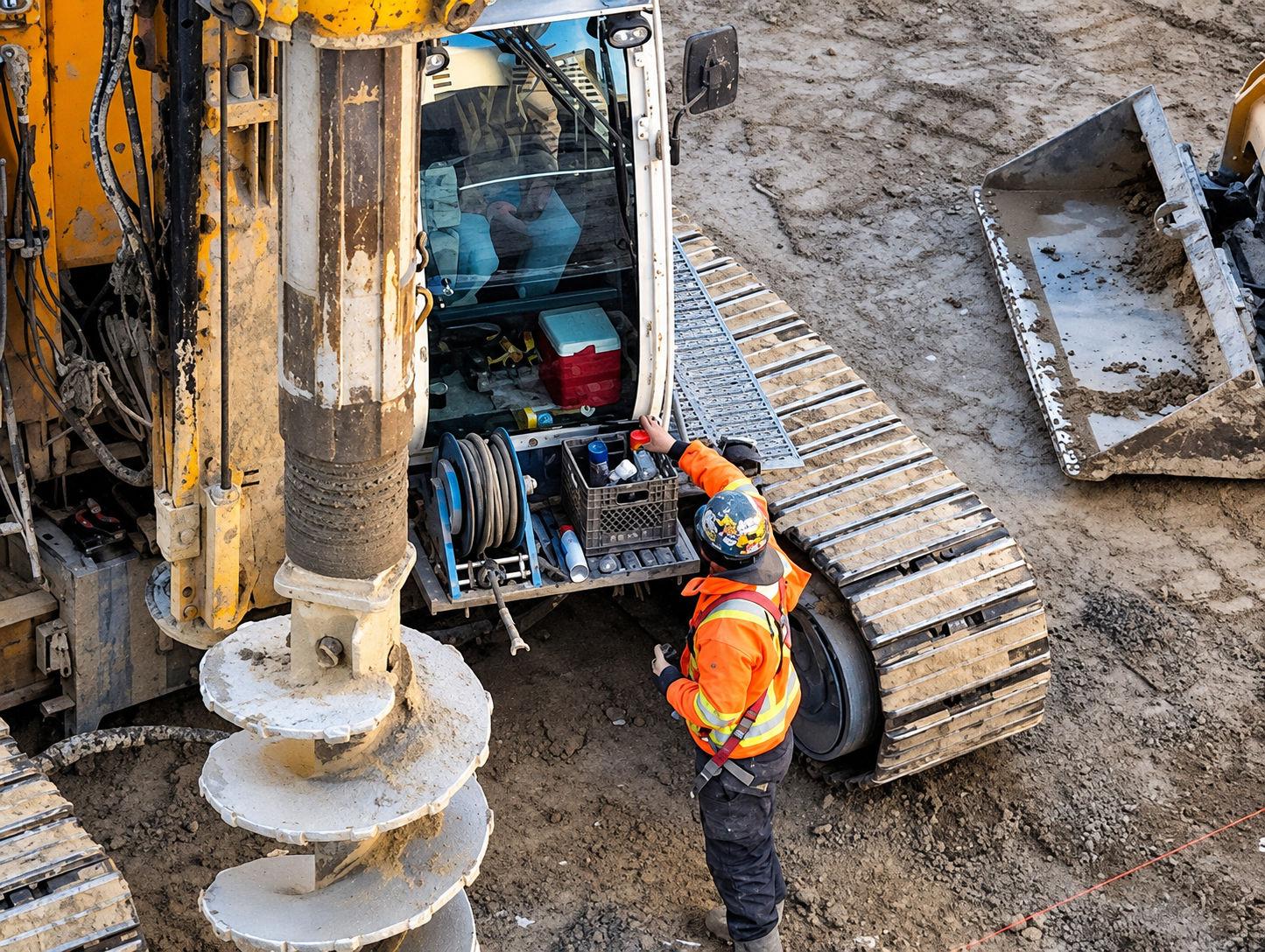
Operating hours are the starting point of any inspection, but they are only useful when verified.
Point 1: Read the hour meter and compare it with the machine's condition. A machine showing 2,500 hours should look like a machine with 2,500 hours. If the pedals are polished smooth, the seat is torn, the control levers are loose and the undercarriage is heavily worn, the reading deserves suspicion.
Point 2: Cross-check hours against service records and photographs. Ask for earlier service invoices that mention hour readings. Inconsistent numbers between documents and the meter are a major warning sign.
Point 3: Ask how and where the machine was used. Rock breaking, quarry work and continuous heavy-duty operation wear a machine faster than general earthmoving. Hours alone do not tell the full story.
If you want to understand hour meters in more detail, read our guide: What Does Machine Operating Hours Mean? Understanding Hour Meters in Construction Equipment.
2. Inspect the Engine Condition
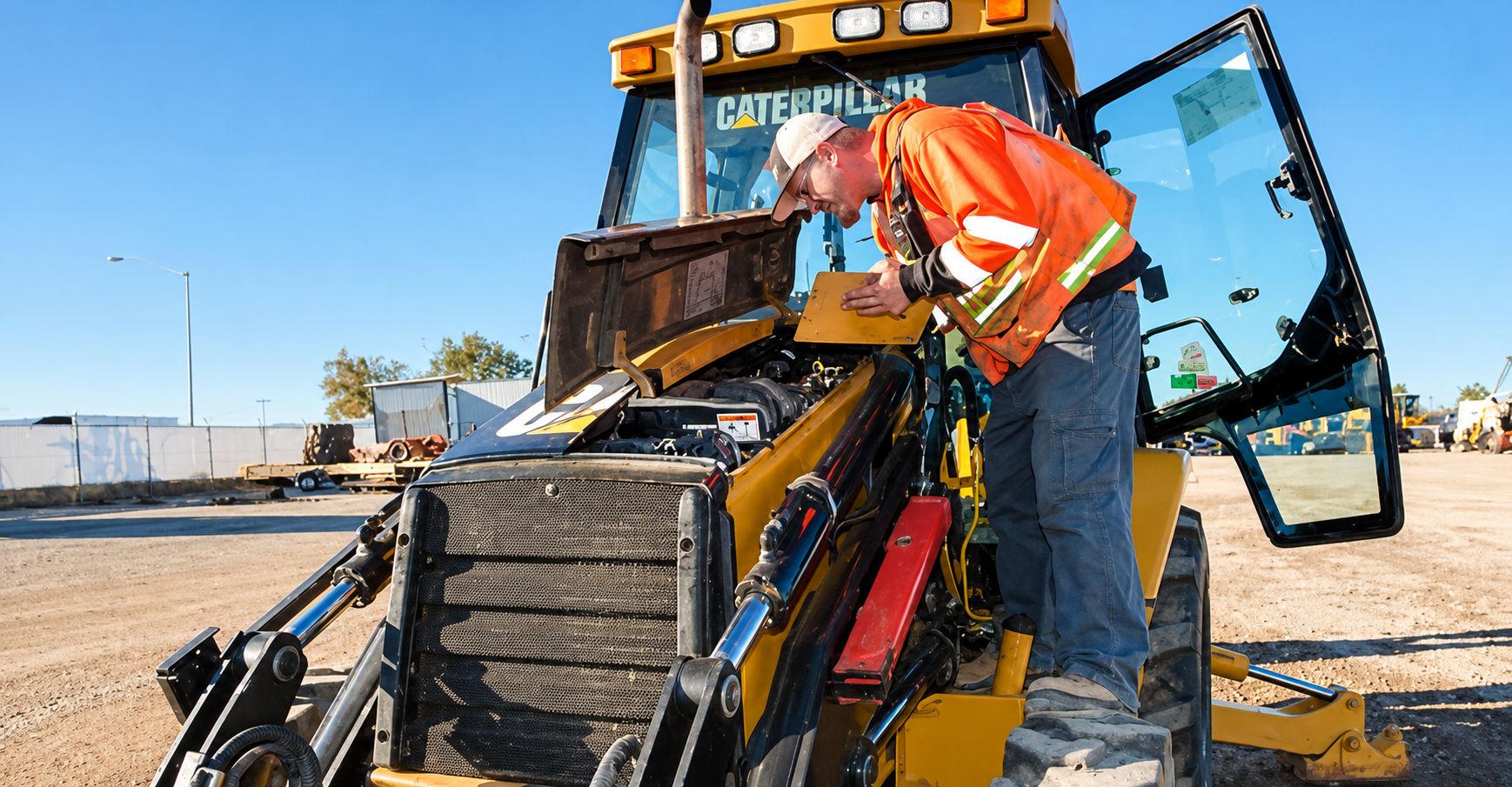
The engine is the most expensive component to repair or replace, so spend real time here.
Point 4: Do a cold start. Ask the seller not to warm up the machine before you arrive. A cold engine that struggles to start, knocks or produces heavy smoke on startup may have internal wear.
Point 5: Check exhaust smoke. Black smoke can point to fuel or air supply problems, white smoke to coolant or combustion issues, and blue smoke to oil burning. Light smoke on startup that clears quickly is usually acceptable.
Point 6: Examine engine oil, coolant and leaks. Pull the dipstick and check the oil. It should not look milky, gritty or burnt. Look around the engine, turbocharger and radiator for oil or coolant leakage, and check the air filter for dust ingress.
Point 7: Listen for unusual noise. Knocking, ticking, whining or vibration at idle and under load should be investigated by a mechanic before you commit.
3. Check Hydraulic Systems and Cylinders
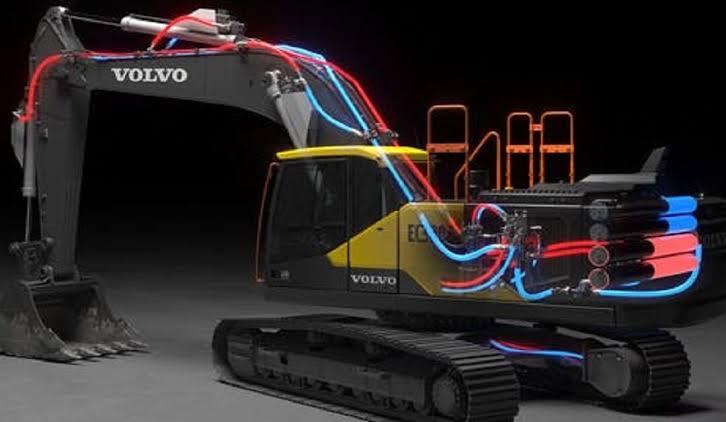
Hydraulics drive nearly every working movement in an excavator, backhoe loader or loader. Repairs are costly and downtime is expensive.
Point 8: Inspect hydraulic cylinders and seals. Look for oil film or active dripping around the rod seals of the boom, arm and bucket cylinders. Check the chrome rods for scoring, pitting or rust.
Point 9: Examine hoses, fittings and the hydraulic pump. Look for cracked, patched or recently replaced hoses, wet fittings and signs of overheating. Whining noises from the pump can indicate wear or cavitation.
Point 10: Test speed, power and responsiveness. Operate boom, arm, bucket, swing and travel through full range. Slow movements, hesitation, drifting when the lever is released or weak breakout force suggest internal wear or low pressure.
For a deeper dive, see: How to Evaluate Hydraulic Performance in Used Construction Machinery.
4. Inspect Transmission and Gearbox
Point 11: Test gear shifting and drive response. On wheeled machines such as backhoe loaders, shift through all gears forward and reverse. Delays, jerks, slipping or unusual noise indicate wear. On tracked machines, check that both tracks drive smoothly, turn evenly and do not pull to one side.
Also check the final drives and travel motors for leakage and noise, and look for oil leaks around the gearbox housing.
5. Examine the Undercarriage
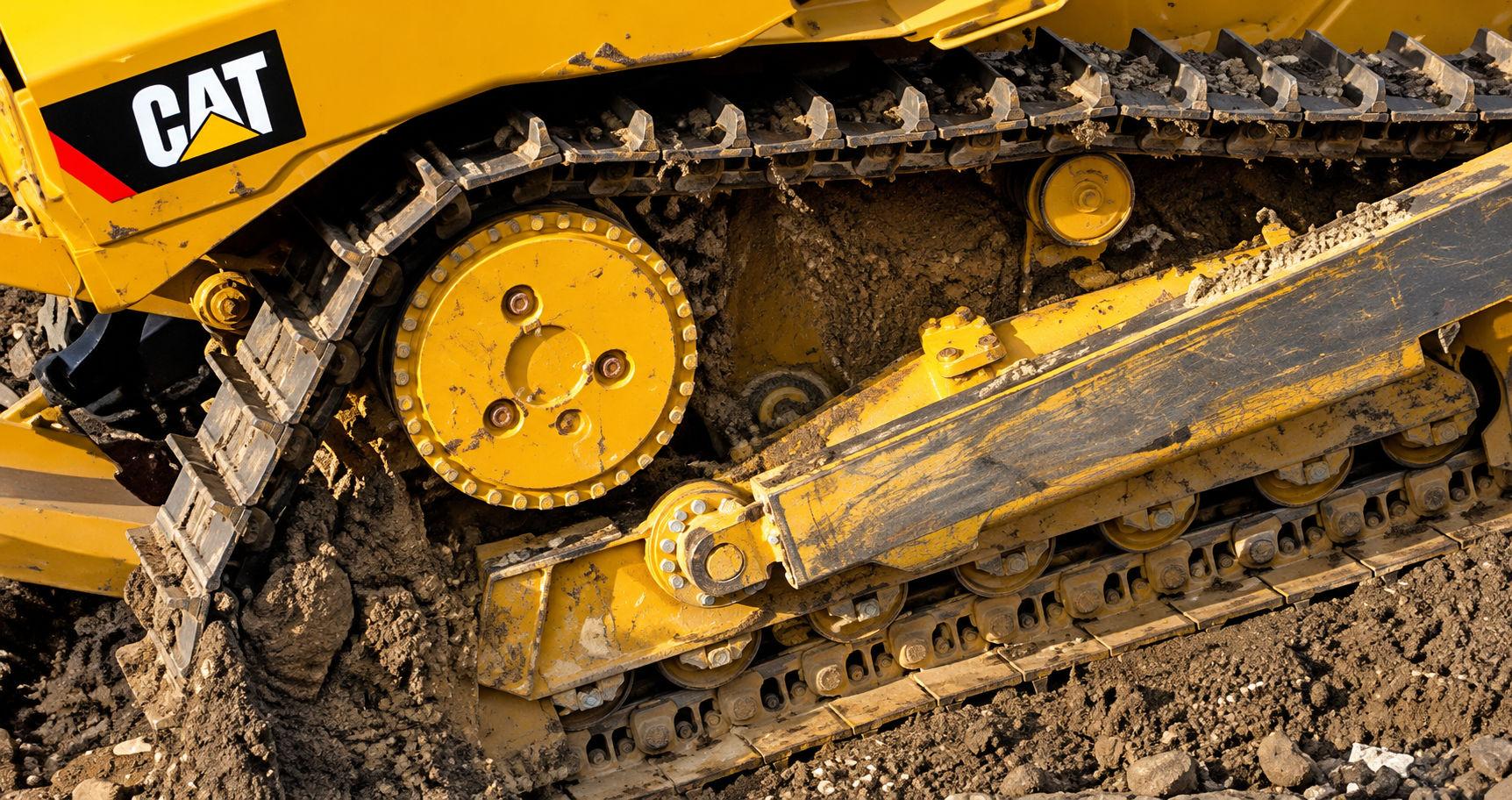
For tracked machines, the undercarriage can account for a large share of long-term maintenance cost.
Point 12: Inspect track links, rollers and sprockets. Look for uneven wear, flat spots, cracked rollers and hooked or sharpened sprocket teeth. Uneven wear often indicates misalignment or poor operating habits.
Point 13: Check track tension and idlers. Tracks that are too loose or too tight accelerate wear. Leaking rollers and idlers are an early sign of replacement costs.
Point 14: Measure remaining life where possible. Ask the dealer or a technician to estimate how much undercarriage life is left, and factor replacement cost into your price.
Buying a compact machine? Our Mini Excavator Buying Guide covers model-specific considerations in more detail.
6. Check Structural Damage, Welding and Cracks
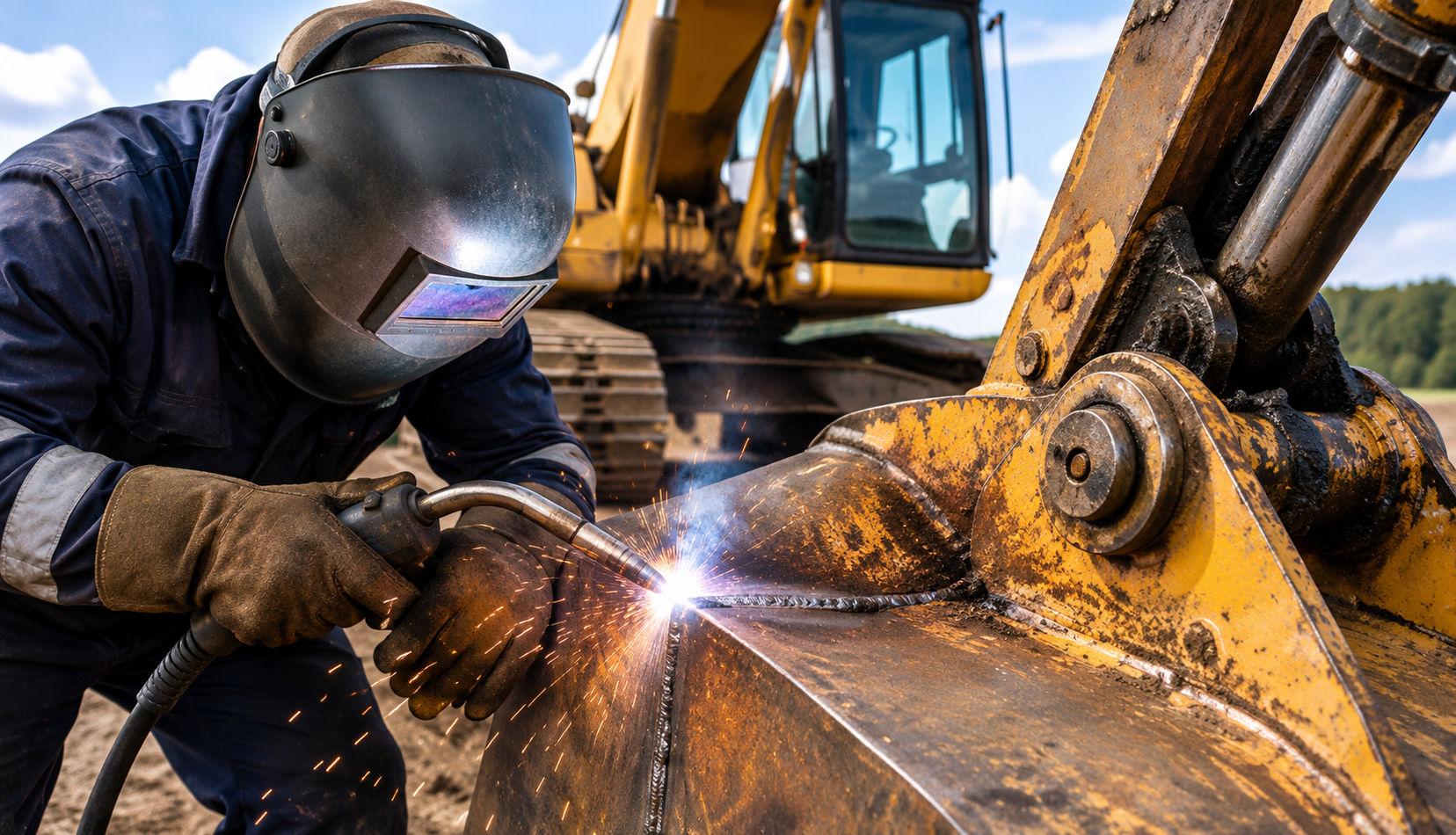
Point 15: Inspect the boom, arm, chassis and bucket linkage. Walk around the machine slowly with a torch. Look for cracks around pin bosses, boom foot, arm tip and the swing frame.
Point 16: Look for poor-quality or repeated welding. Rough, uneven weld beads, added plates and fresh paint concentrated in one area often indicate previous cracks or accident repair.
Point 17: Check pins, bushings and slewing play. Excessive play at pins and bushings causes poor digging accuracy and rapid secondary wear. Test the swing ring for looseness.
7. Inspect Electrical Systems
Point 18: Check dashboard, warning lights and sensors. Start the machine and watch the monitor. Warning lights that stay on, error codes or removed bulbs are red flags. Confirm that gauges, alarms, lights and wipers work.
Point 19: Examine wiring, battery and starter. Look for taped joints, exposed wires and non-standard modifications. Check the battery, alternator charging and starter response.
8. Evaluate Tyres, Tracks and Attachments
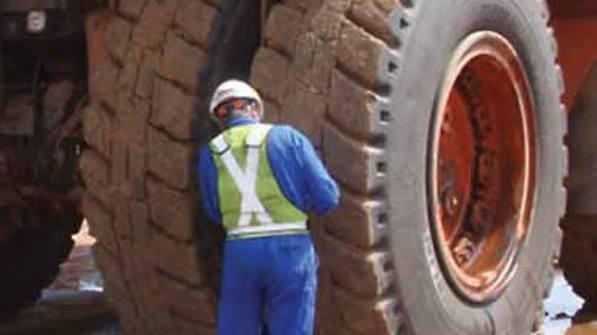
Point 20: Inspect tyres or track pads. On wheeled machines, check tread depth, sidewall cuts and uneven wear that may indicate alignment or axle problems. On tracked machines, check pad condition and any missing bolts.
Point 21: Check buckets, breakers and other attachments. Bucket teeth, cutting edges, side cutters and quick couplers should not be excessively worn. If attachments are included in the price, test them too.
For road and plant equipment such as cold milling machines, asphalt hot mix plants and reversible concrete mixers, apply the same principle: inspect the wear parts, drive systems and control systems that are specific to that category.
9. Review Service and Maintenance Records
A machine with regular, documented service is usually a safer purchase than one that looks cleaner but has no history.
- •Ask for service invoices, oil change records and repair history.
- •Check whether genuine or good-quality parts were used.
- •Look for major component replacements such as engine overhauls, pump replacements or undercarriage work.
- •Ask why the machine is being sold.
If the owner cannot provide any records at all, treat that as a risk and price accordingly.
10. Verify Ownership and Documentation
Documentation problems can be as damaging as mechanical ones. They can block transfer, create legal disputes and reduce resale value. Requirements vary depending on equipment type, so confirm what applies to your specific machine with the seller, your finance provider or a qualified professional.
Point 22: Verify seller identity and ownership proof. Confirm that the person or company selling the machine is the legal owner and has the authority to sell.
Point 23: Check the original invoice, GST invoice and tax treatment. Ask for the original purchase invoice where available. Confirm the GST invoice and how tax will apply to your purchase, and consult your accountant if unsure.
Documents to check in India:
- •Seller identity and ownership proof
- •Original purchase invoice, where available
- •Finance closure and lender NOC, where applicable
- •Hypothecation status, where applicable
- •GST invoice and applicable tax treatment
- •Machine serial number and chassis identification
- •Applicable registration and transfer requirements
Point 24: Match serial numbers and chassis identification. Compare the serial number on the machine, engine and chassis plate against the paperwork. Mismatches, scratched numbers or replaced plates need a clear explanation.
Also confirm finance closure, lender NOC and hypothecation status if the machine was bought on loan. Never pay in full before you are satisfied that ownership can be transferred cleanly.
For a dedicated walkthrough, read: How to Verify Construction Equipment Ownership Before Purchasing.
11. Conduct a Live Machine Performance Test
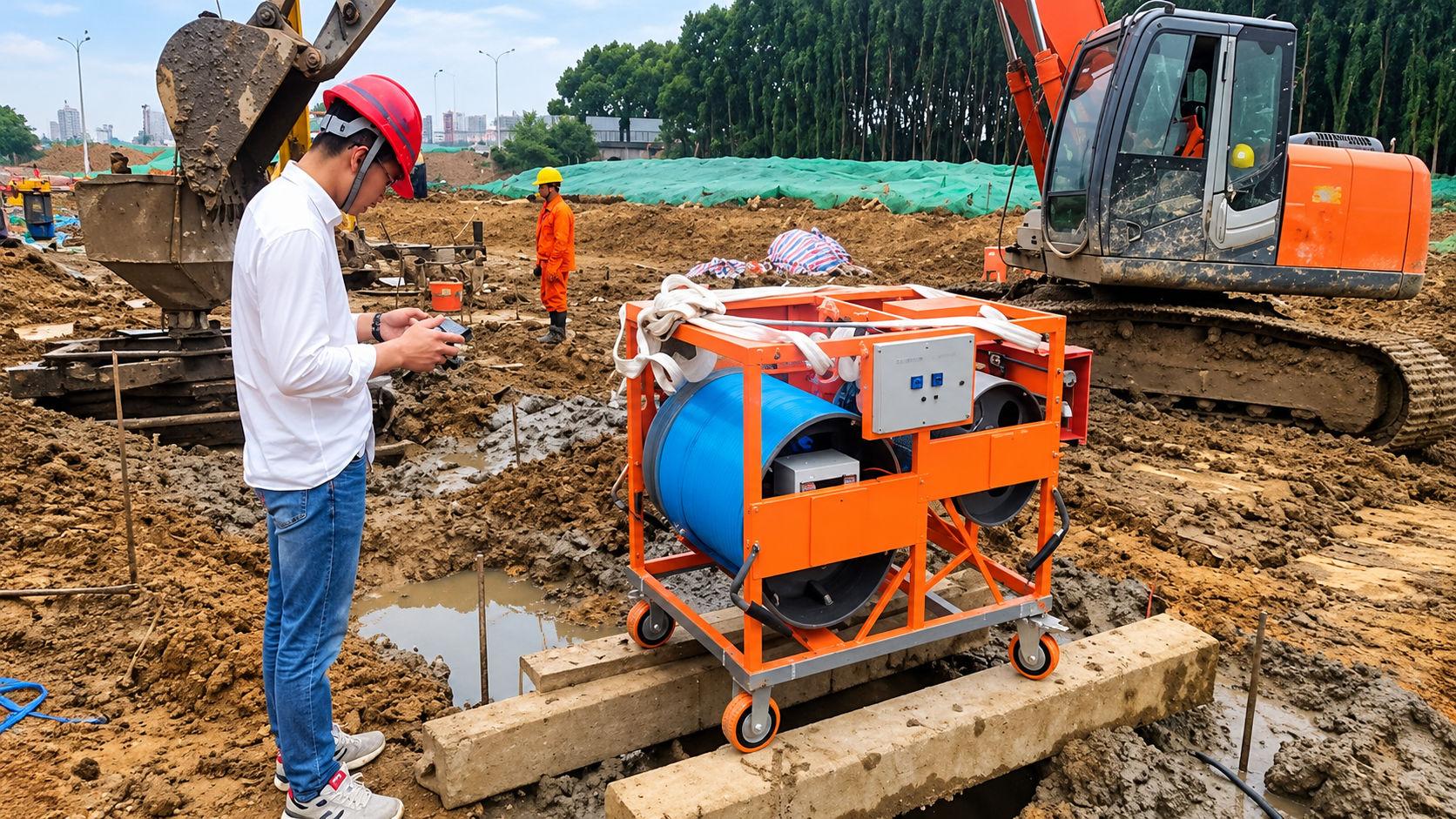
Point 25: Run the machine under real working conditions. Do not rely on a quick demonstration. Ask to operate the machine yourself, or have your own operator do it, for at least 30 to 60 minutes.
During the test:
- •Dig, lift, swing and travel repeatedly.
- •Watch temperature gauges and listen for changes in sound as the machine warms up.
- •Check for leaks after the machine has worked and fluids have heated up.
- •Observe whether performance drops once the hydraulic oil gets hot.
A machine that performs well only for the first five minutes is a warning sign.
12. Calculate the Actual Cost of Ownership
The asking price is not what you will actually spend. Calculate the true cost before you negotiate:
Actual Purchase Cost = Machine Price + Repairs + Transport + Initial Maintenance
For example, a machine priced at ₹20,00,000 that needs ₹1,50,000 in repairs, ₹40,000 in transport and ₹30,000 for fluids, filters and initial servicing really costs ₹22,20,000. A competing machine priced at ₹21,50,000 in good condition may be the better deal.
Also consider insurance, operator availability, fuel consumption and expected downtime. To compare buying options more broadly, see: New vs Used Construction Equipment: Total Cost of Ownership Comparison.
13. Check Spare Parts Availability
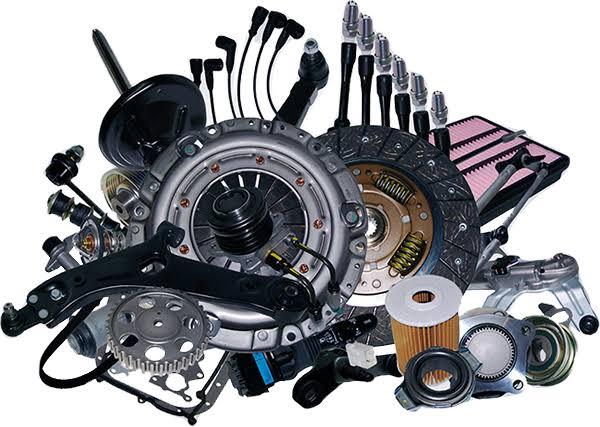
A cheap machine that cannot be repaired quickly becomes an expensive one. Before buying, confirm:
- •Whether parts and filters are easily available in India for that brand and model
- •Whether authorized dealers or reliable service providers are present near your project locations
- •Lead times and approximate prices for common wear parts
Established brands with strong dealer and parts networks generally reduce downtime. You can find trusted parts and service providers through the MachanX supplier directory.
14. Evaluate Resale Value
Think about your exit before you buy. Resale value depends on brand reputation, hours, maintenance history, model popularity, documentation and condition. Machines with complete paperwork and clear service history sell faster and at better prices.
To understand what drives pricing, read: Used Construction Equipment Price in India: Factors That Affect Resale Value.
Common Red Flags When Buying Used Machinery
Walk away, or at least renegotiate heavily, if you see any of the following:
- •The seller refuses a live test or an independent mechanic's inspection
- •The hour meter reading does not match the machine's condition or records
- •Fresh paint concealing leaks, cracks or repair work
- •Missing, mismatched or scratched serial numbers
- •Unclear ownership, or reluctance to share invoices and documents
- •Finance not closed, with no lender NOC available
- •Pressure to pay quickly or pay entirely in cash
- •Warning lights disabled or electrical modifications
- •Prices far below the market with no clear explanation
Used Construction Equipment Inspection Checklist
Print this section and carry it with you. Mark each item as OK, Needs repair or Reject.
| Serial No. | Inspection point | Status |
|---|---|---|
| 1 | Hour meter matches machine condition | |
| 2 | Hours match service records | |
| 3 | Usage history and application confirmed | |
| 4 | Cold start performance | |
| 5 | Exhaust smoke | |
| 6 | Engine oil, coolant and leaks | |
| 7 | Engine noise and vibration | |
| 8 | Hydraulic cylinders and seals | |
| 9 | Hoses, fittings and pump | |
| 10 | Hydraulic speed and power | |
| 11 | Transmission and drive response | |
| 12 | Track links, rollers and sprockets | |
| 13 | Track tension and idlers | |
| 14 | Remaining undercarriage life | |
| 15 | Boom, arm and chassis cracks | |
| 16 | Welding quality | |
| 17 | Pins, bushings and swing play | |
| 18 | Dashboard and warning lights | |
| 19 | Wiring, battery and starter | |
| 20 | Tyres or track pads | |
| 21 | Bucket and attachments | |
| 22 | Seller identity and ownership proof | |
| 23 | Invoice, GST and finance NOC | |
| 24 | Serial number and chassis match | |
| 2 | Live performance test |
Before payment, also confirm: service records reviewed, actual cost calculated, spare parts availability checked and resale value considered.
FAQs
What should I check before buying a used excavator? Check operating hours, engine condition, hydraulic leaks, undercarriage wear, structural cracks, electrical systems, service records and ownership documents. Always run a live test. See our full guide on how to check the actual condition of a used excavator.
How many hours is too many for a used construction machine? There is no single number. Condition, maintenance history and the type of work matter as much as hours. A well-maintained machine with higher hours can be better than a neglected machine with fewer hours.
Which documents are required when buying second-hand construction equipment in India? Typically seller identity and ownership proof, the original invoice where available, GST invoice, finance closure and lender NOC where applicable, hypothecation status, serial number verification and any applicable registration or transfer documents. Requirements vary by equipment type, so verify them before payment.
Should I hire a mechanic to inspect the machine? Yes, especially for high-value machines. A brand-specific mechanic can spot issues that are easy to miss, and the inspection fee is small compared with a major repair.
Is it better to buy new or used construction equipment? It depends on budget, utilisation, project duration and risk tolerance. Used machines cost less upfront, but total cost depends heavily on condition and repair needs.
Buy Smart. Buy With Confidence.
A good inspection takes a few hours. A bad purchase can cost you months of downtime and lakhs in repairs. Use this checklist, verify the documents, calculate the real cost and negotiate with facts.
Ready to find your next machine? Explore verified listings on MachanX before making your next purchase:
- •Used excavators on MachanX
- •Mini excavators on MachanX
- •Backhoe loaders on MachanX
- •All construction equipment listings
- •Find suppliers and service providers
machanx.com