


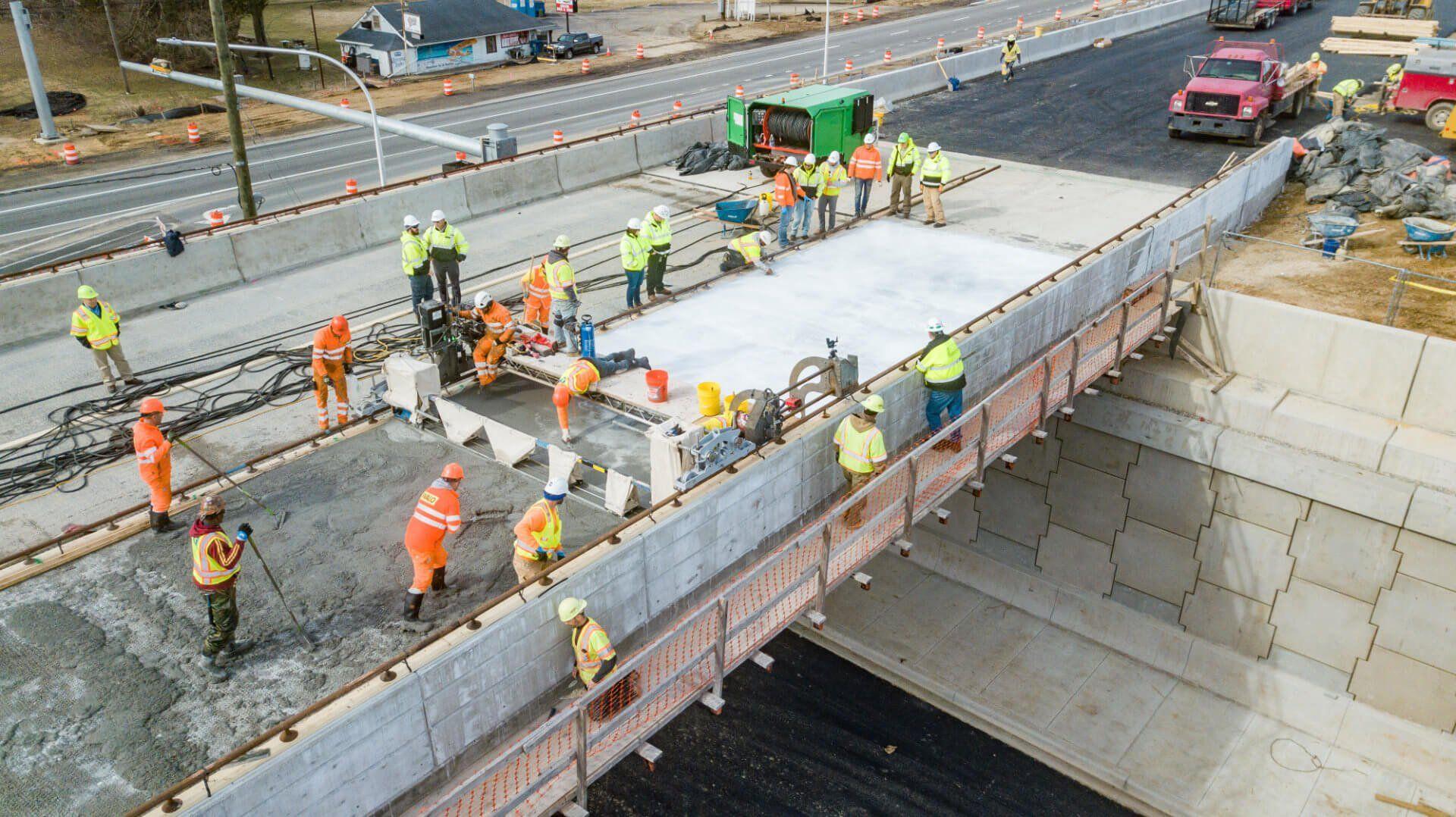
Bridge Construction Equipment List: From Foundation to Final Tensioning
From laying foundations to tensioning the final cable, here is every machine that keeps a bridge project moving.
Talk to any experienced bridge contractor and they will tell you the same thing: the project does not fail because of a bad design. It fails because someone showed up to site without the right equipment.
Bridge construction is not like building a warehouse or laying a road. The loads are enormous, the tolerances are tight, and the consequences of getting it wrong are serious. Every stage, from the moment you start moving earth to the day you stress the final tendon, requires machinery that is purpose-built for the job.
This guide covers every key category of bridge construction equipment. We have written it to be genuinely useful whether you are planning your first major bridge project or reviewing your fleet before a new contract. No filler, no padding. Just the equipment that actually matters and why.
1. Foundation and Earthwork Equipment
The ground does not care how good your structural design is. If the foundation moves, the bridge moves. Foundation preparation is the stage most contractors rush and most projects regret.
The three machines you cannot go to site without:
• Excavators and Backhoes: Your primary equipment for digging pier foundations, abutments, pile caps, and approach roads. On river crossings, you need a machine that can work in wet, unstable conditions without sinking into the bank.
• Pile Drivers: When surface soil cannot carry the load, piles go in. Pile drivers push steel, concrete, or timber sections deep enough to reach bearing strata. In marshy ground or riverbeds, there is no alternative.
• Soil Compactors and Rollers: Every embankment and approach fill needs compaction. A properly compacted subgrade does not settle under repeated traffic loading. Skip this step and you are building problems into the structure from day one.
Do not treat foundation work as the stage to save time or cut costs. Every hour you invest here pays back tenfold in the stages that follow.
2. Hydraulic Lifting and Positioning Systems
This is where bridge construction separates itself from everything else in civil engineering. The lifting operations involved in placing bridge segments require a level of precision that standard cranes simply cannot deliver on their own.
Strand Jacks
Strand jacks are the workhorse of major bridge lifting operations. They grip steel tendons and pull heavy bridge sections upward with millimetre-level control. They are used for lifting segments into position during construction and for supporting spans during controlled demolition.
Controlled Lifting Pumps
When you need to move a bridge section across multiple lifting points simultaneously, a controlled lifting pump keeps every cylinder in sync. Use these for moving box beam girders, operating launching gantries, lifting decks for bearing replacement, and managing counterweights. The moment your load goes out of level, you have a problem. These pumps prevent that.
High-Tonnage Hydraulic Cylinders
Rated up to 1,000 tonnes, these cylinders take over in the final positioning stages where precision matters most. They also allow maintenance teams to lift an entire bridge deck clear of its bearings without disrupting surrounding infrastructure.
Low-Height Cylinders
Bridges have awkward access constraints underneath the deck. Low-profile cylinders solve this by delivering serious lifting force from a footprint small enough to fit in the gaps that standard cylinders cannot reach.
Contractor Tip: Always pair hydraulic cylinders with a pressure monitoring system on bridge lifts. One cylinder doing more work than the others is an early warning sign you need to catch before the load shifts.
3. Skidding Systems
Rapid bridge construction has changed how contractors think about installation. Rather than hoisting a completed bridge span overhead with cranes, skidding slides it horizontally into position. Road closures that used to take a weekend now take hours.
• How it works: The bridge span is built off to the side on temporary supports. Once complete, a hydraulic push-pull cylinder system slides it along PTFE-coated tracks directly onto the permanent supports.
• Synchronous control: A split-flow valve system keeps all cylinders moving at the same rate regardless of load variation at each point. The span stays stable throughout the move.
• Distance is not a constraint: Tracks can be repositioned ahead of the load using a leap-frog method, meaning the same system can cover any distance needed.
Skidding is especially valuable on live traffic routes, in urban environments with overhead obstructions, or anywhere crane access is restricted by site geometry.
4. Superstructure Erection Equipment
Once the substructure is complete, the structural components of the bridge need to go up. This stage involves the heaviest lifts on the project and the least margin for error.
• Crawler, Mobile and Tower Cranes: For lifting steel girders, precast segments, and deck sections at height and distance. On large projects, multiple cranes often work in tandem.
• Launching Gantries and Segment Lifters: In segmental construction, the gantry travels along the completed portion of the bridge and reaches forward to place the next segment. It is one of the most impressive pieces of kit on any major infrastructure site.
• Modular Spreader Beams: These distribute lifting load evenly across wide or irregular sections, protecting both the component and the lifting equipment from overload. Adjustable designs accommodate different section sizes without re-rigging.
• SyncHoists: A below-the-hook attachment that rotates and aligns box beams into exact position while suspended from a single crane. Without one, you are using two cranes to do a job that needs one.
5. Concrete and Deck Construction Machine
Concrete is the material that holds a bridge together and the quality of the concrete work is visible in the structure for its entire working life. Equipment at this stage needs to be reliable, consistent, and capable of handling large volumes without compromise.
• Concrete Batching Plants: Consistent mix ratios are not optional in structural bridge concrete. A properly calibrated batching plant is the only way to guarantee this across a long pour.
• Transit Mixers and Concrete Pumps: Getting concrete to the right place at the right time across a long span or at height requires dedicated pumping equipment. Delays here often cascade into cold joints and pour failures.
• Formwork Systems: Steel and aluminium formwork shapes piers, columns, and deck soffits. Poorly designed or damaged formwork is a structural risk. This is not the place to economise.
• Vibrators and Screeding machines: Internal vibrators consolidate concrete around reinforcement and eliminate air pockets. Screeding levels the surface to the required finish. Both are essential for a deck that will last.
6. Post-Tensioning and Stressing Equipment
Post-tensioning is what allows modern bridges to span distances that would be impossible with unreinforced concrete alone. The principle is straightforward: steel tendons are threaded through ducts in the concrete and then tensioned after the concrete has cured, putting the deck into compression and dramatically increasing its load capacity.
Getting the stressing operation right requires precision equipment and experienced operators.
• Multi-Strand Hydraulic Jacks: Tension multiple tendons simultaneously to a consistent force level. Faster than single-strand stressing and more uniform across the deck.
• Mono-Strand Jacks: Used where individual cable access is limited or where the design requires staged tensioning.
• Grouting Pumps: After stressing, the tendon ducts are filled with cementitious or epoxy grout to protect the steel from moisture and corrosion. This step is critical for long-term durability and is often where shortcuts lead to expensive future failures.
Important: Post-tensioning records must be documented for every tendon on every pour. Stressing loads, elongation measurements, and grouting completion should all be signed off before formwork is struck.
7. Bar Bending and Bar Cutting Machines
These two machines do not get the same attention as cranes and hydraulic jacks, but on a large bridge project they are on the critical path every single day. Every pier, pile cap, abutment wall, and deck slab needs reinforcement steel that has been cut to the right length and bent to the right profile before the pour can happen.
Get behind on rebar fabrication and you delay the concrete work. Delay the concrete work and you delay everything that comes after it.
Bridge drawings specify complex rebar profiles: stirrups with precise hook dimensions, helical reinforcement for circular piles, cranked bars at lap locations, and U-bars along deck edges. A motorised bar bending machine produces these profiles consistently, quickly, and to the millimetre tolerances the drawings require.
What to look for when specifying a bar bending machine for bridge work:
• Bar diameter range from 6mm up to 40mm or 50mm to cover all structural elements
• Programmable angle settings for fast changeover between profiles
• Heavy-duty motor and gearbox capable of sustained use across multiple daily shifts
• Portable enough to relocate as the work front moves along the bridge alignment
Cutting rebar by hand with angle grinders introduces variation, generates hazardous sparks, and slows the whole steel yard down. A bar cutting machine eliminates all three problems at once.
On bridge projects specifically, precise bar lengths matter for three technical reasons:
• Lap lengths and anchorage zones in structural drawings are calculated to exact bar lengths. A bar that is too short at a lap location is a non-compliance.
• Square, clean cuts at bar ends reduce stress concentrations in high-load zones like pier bases and abutment walls where fatigue can be a design consideration.
• Speed of cutting directly controls the pace of cage fabrication, which is usually on the critical path ahead of pier and deck pours.
On most bridge projects, bar bending and cutting machines are set up together in a dedicated steel yard close to the active work front. Keeping the steel yard well-organised and properly equipped is one of the highest-return investments a bridge contractor can make in project efficiency.
8. Complete Bridge Equipment Checklist
Use this before mobilising to site. A gap in any one category has the potential to stop work entirely.
| Equipment Category | Key Machines | Stage |
|---|---|---|
| Foundation | Excavator, Pile Driver, Compactor | Pre-construction |
| Lifting & Hydraulics | Strand Jacks, High-Tonnage Cylinders | All stages |
| Skidding | Hydra-Slide XLP, Skid Tracks | Installation |
| Superstructure | Cranes, Launching Gantry, Spreader Beams | Erection |
| Concrete Works | Batching Plant, Pump, Formwork | Deck & Piers |
| Post-Tensioning | Hydraulic Jacks, Grouting Pumps | Post-deck |
| Alignment & Survey | Laser Level, Total Station, SyncHoist | Throughout |
| Safety | Scaffolding, Harnesses, Safety Nets | All stages |
9. Should You Rent or Buy Bridge Construction Equipment?
This question comes up on every major project and the honest answer depends on how often you use the equipment, not how expensive it is.
Rent when:
• The equipment is highly specialised and used once or twice per year at most. Strand jacks, synchronous lifting systems, and skidding rigs fall into this category for most contractors.
• The rental supplier provides trained operators and on-site technical support as part of the arrangement. For complex hydraulic systems, this is worth a great deal.
• Capital is better deployed elsewhere on the project or business.
Buy when:
• The equipment is used on every project and your utilisation rate consistently exceeds 60 to 70 percent of the working year.
• Owning reduces your exposure to third-party availability issues and supply chain delays that can push project start dates back.
• Standard plant such as bar bending machines, bar cutting machines, excavators, compactors, and concrete pumps almost always makes more sense to own.
The most cost-effective approach for most bridge contractors is a hybrid model. Own the standard plant you use on every job. Rent the specialist lifting and positioning equipment on a project-by-project basis.
Cost Reference (India): Basic hydraulic cylinder rental: Rs 55,000 to Rs 2,20,000 per week. Synchronous lifting system or launching gantry: Rs 22,00,000 to Rs 1,10,00,000 or more per month. Full fleet ownership for a major project: several crores of capital investment.
10. Frequently Asked Questions
What is the most critical piece of equipment in bridge construction?
There is no single answer because the critical piece changes with the stage of work. Foundation phase: the pile driver. Erection phase: the crane and launching gantry. Rebar phase: the bar bending and cutting machines. Finishing phase: the post-tensioning jack. Underestimating any one category is where projects run into trouble.
Can standard construction equipment be used for bridge work?
Some overlap exists. Excavators, compactors, and general-purpose cranes are common to both. But specialist bridge equipment such as strand jacks, multi-strand stressing jacks, skidding systems, synchronous lifters, and launching gantries has no real equivalent in general construction and must be sourced specifically.
How important are bar bending and cutting machines on a bridge site?
More important than most people realise. These machines sit at the start of the concrete work critical path on every single pier and deck pour. A well-run steel yard with properly maintained bar bending and cutting equipment is one of the most reliable ways to keep a bridge project on programme.
What safety equipment is non-negotiable on a bridge site?
Full-body harnesses and lifelines for all work at height, safety nets beneath spans under construction, scaffolding and access platforms for elevated pier and deck work, and vehicle exclusion barriers protecting live traffic below. These are minimum requirements, not optional extras.
Final Thoughts
There is a reason experienced bridge contractors are particular about their equipment. When you are working at height, over water, under traffic, and to structural tolerances that leave no room for error, the machinery has to perform every single time.
The best bridge projects are not necessarily the ones with the biggest budgets. They are the ones where the right equipment is on site at the right time, operated by people who know how to use it. From the pile driver going in on day one to the grouting pump on the final tendon, every machine on this list earns its place.
Plan your equipment schedule early, build rental lead times into your programme, and treat your steel yard as seriously as your concrete works. Do those three things consistently and you will deliver better bridge projects than most.