


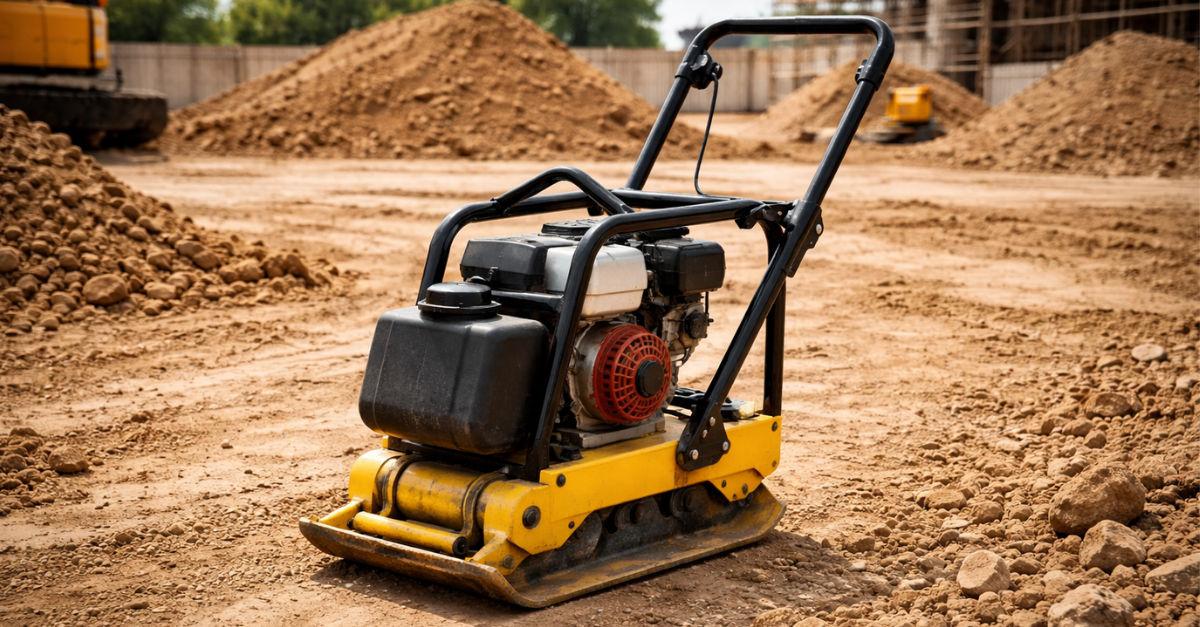
 Plate Compactor Size Guide: Find the Right Match for Your Soil
Buying a plate compactor without knowing your soil type is a bit like buying shoes without knowing your size. You might get lucky, but you probably won't. The wrong compactor for the wrong soil means loose, unstable ground, wasted time, and money down the drain.
Whether you are prepping a driveway, laying a foundation, or backfilling a trench, getting the plate compactor right from the start makes every next step easier. This guide breaks down exactly how to match compactor size to soil type, so you can walk into any equipment supplier with confidence.
What Is a Plate Compactor and Why Does It Matter?
A plate compactor is a piece of construction equipment with a heavy, flat steel base plate that vibrates at high speed. As it moves over a surface, those vibrations push particles of soil, gravel, or asphalt closer together, squeezing out air pockets and water gaps until you have a dense, stable layer.
That dense layer is what carries the load. A properly compacted surface resists shifting, prevents cracking, and stops water from sneaking underneath and eroding everything you built. Skip it, and even a well-designed structure can fail over time.
Types of Plate Compactors: Which One Are You Looking At?
Before talking size, it helps to know the three main plate compactor types available on the market:
Forward plate compactors move in one direction and are the most common choice for small to medium residential jobs. They are lighter, easier to handle, and great for flat, accessible surfaces.
Reversible plate compactors can go forward and backward, making them perfect for tight spots and larger projects where you cannot keep looping around. They also deliver more compaction force, often up to 4082 kg.
Heavy-duty plate compactors are the machines for commercial-grade projects, deep lifts of stubborn material, and large areas that need serious compaction force across multiple passes.
Understanding Soil Types Before You Buy a Plate Compactor
This is the section most buyers skip, and it is the most important one. Not all soils respond the same way to vibration. Get this wrong and your compactor either underperforms or damages the material.
Granular Soils (Sand, Gravel, Crushed Stone)
Granular soils are dry, loose, and crumbly. They respond extremely well to vibration because the particles slide against each other and lock into place under the right frequency. A standard forward or reversible plate compactor works very well here.
For typical driveways or path bases with 4 to 6 inch lifts of gravel, a mid-range forward compactor in the 150 to 200 lb range with a plate width of around 20 inches is usually spot on. For deeper lifts or large areas, step up to a reversible model.
Cohesive Soils (Clay, Silt, High-Moisture Content)
Clay and silt soils are sticky, hold together when wet, and do not respond to vibration in the same way as sand or gravel. Trying to compact wet clay with a standard plate compactor often makes things worse, pumping the soil rather than packing it.
For these soils, a heavy-duty reversible compactor or a jumping rammer is a much better fit. If you are working with cohesive soils regularly, look for a machine with higher centrifugal force and a slightly narrower plate that can concentrate pressure per square inch.
Mixed or Fill Soils (Common in Backfill and Trench Work)
Backfill material from excavation is often a mix of clay, sand, rocks, and organic matter. This is unpredictable stuff. A reversible plate compactor with adjustable vibration settings gives you the flexibility to adapt as conditions change throughout the job.
Work in thin lifts of 6 to 8 inches maximum when dealing with mixed fill, and make multiple overlapping passes before adding the next layer.
Plate Compactor Size Guide: Matching the Machine to the Job
Here is a practical breakdown of how compactor size relates to project scale and soil type:
| Project Type | Soil Type | Recommended Size | Compactor Type |
|---|---|---|---|
| Small patio / walkway | Granular (sand, gravel) | 45-68 kg, 16-18" plate | Forward |
| Driveway base | Granular / Mixed | 68-90 kg,, 18-20" plate | Forward / Reversible |
| Retaining wall backfill | Mixed / Fill | 90-113 kg, 20" plate | Reversible |
| Road base / large area | Granular | 113 kg+ , 22-24" plate | Reversible / Heavy-duty |
| Trench backfill (tight) | Mixed / Clay | 68-90 kg, narrow plate | Reversible or Rammer |
| Commercial foundation | Clay / Cohesive | Heavy-duty, high force | Heavy-duty Reversible |
Key Plate Compactor Specifications You Need to Know
Once you know your soil type, these four specs will guide your final decision:
Centrifugal force: This is the actual compaction power, measured in pounds or kilonewtons. More centrifugal force means deeper, denser compaction. For cohesive soils, you need more of it.
Plate width: Wider plates cover more area per pass but are harder to use in tight spots. For trench work or narrow paths, a compact plate is far more practical.
Engine power (HP): Higher horsepower helps the machine maintain performance under load, especially on larger jobs. It also affects fuel consumption, so weigh the trade-off against your project duration.
Compaction depth: Always match this to your lift depth. As a rule, never exceed the compactor's rated depth per lift. Deeper does not always mean better. [External link: ASTM compaction standards]
One Feature Most Buyers Overlook: The Water Tank
If your project involves asphalt or hot-mix materials, a plate compactor with a built-in water tank is worth every extra dollar. The water forms a thin barrier between the hot material and the plate, preventing the asphalt from sticking and tearing during compaction.
For soil and gravel work, you probably do not need it. But if you are patching roads, laying driveways, or working with any bitumen product, check for this feature before you commit to a machine.
Should You Buy or Rent a Plate Compactor?
If you are a contractor doing multiple compaction jobs per month, buying is almost always the smarter financial move. A quality mid-range reversible plate compactor pays for itself quickly when you factor in daily rental rates over a year.
For homeowners or one-off projects, renting makes total sense. You get access to a professional-grade machine without the maintenance cost or storage headache. Just make sure you tell the rental company your soil type so they put you in the right machine.
Safety Tips Every Plate Compactor Operator Should Know
No guide on plate compactors would be complete without a word on safety. These machines are powerful and the vibrations they produce can cause real harm over time if you are not careful.
Always wear ear protection, safety glasses, steel-toed boots, and anti-vibration gloves. Keep the work area clear of bystanders and watch your footing on uneven ground. Never operate a plate compactor near the edge of a trench without checking stability first.
Read the manufacturer manual before you start. It sounds basic, but the specific start and shutdown procedures differ between models and skipping them is how machines get damaged.
Final Thoughts on Choosing the Right Plate Compactor
The right plate compactor is not the biggest one or the most expensive one. It is the one that matches your soil type, your project scale, and the depth of material you need to compact. Start there, and everything else falls into place.
Take the quick-reference table in this guide to your equipment supplier and you will be in a much stronger position to pick confidently. A solid foundation is not something you can fix later, so get it right the first time with the right plate compactor for the job.
Frequently Asked Questions
What size plate compactor do I need for a gravel driveway?
For a standard residential gravel driveway, a forward or reversible plate compactor in the 68-90 kg range with an 18 to 20 inch plate is usually the sweet spot. It gives you enough force to compact 4 to 6 inch lifts without being too heavy to maneuver.
Can I use a plate compactor on clay soil?
Standard forward plate compactors are not ideal for clay. Clay has high cohesion and responds better to impact or kneading force. For clay, a jumping rammer or a heavy-duty reversible compactor with high centrifugal force is a much better choice.
What is the difference between a forward and a reversible plate compactor?
A forward plate compactor only moves in one direction. A reversible plate compactor can go forward and backward. Reversible models are better for larger areas and confined spaces where you cannot easily turn around. They also typically generate more compaction force.
How many passes should I make with a plate compactor?
Generally, 3 to 5 overlapping passes per lift is a good starting point. The exact number depends on the material, compactor force, and layer depth. If the surface still feels spongy after 5 passes, try reducing your lift depth and repeating.
Is renting a plate compactor worth it for a one-time project?
Absolutely. Renting gives you access to a professional-grade plate compactor without the upfront cost or maintenance. Just describe your soil type and project size to the rental company so they can set you up with the right machine.