


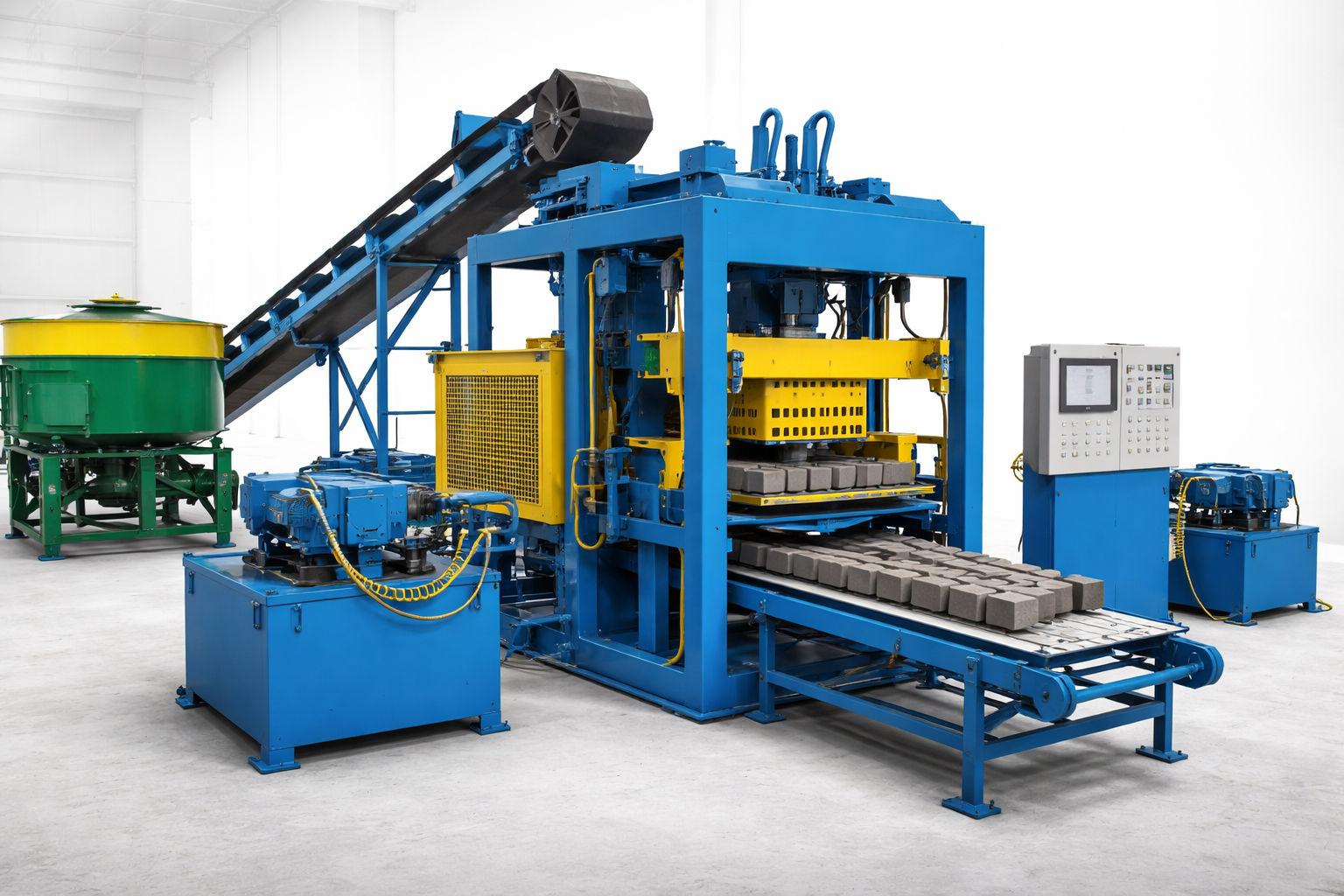
 A Beginner's Guide to Fly Ash Brick Making Machines
If you're in construction and haven't looked into fly ash brick making machines yet, now is a great time to start. These machines are changing how bricks are made across India and beyond, offering a smarter, greener, and more cost-effective alternative to traditional clay or cement bricks.
Whether you're running a small brick plant, planning to start one, or just curious about how fly ash bricks are made, this guide covers everything you need to know, from machine types and the manufacturing process to pricing and what to look for before you buy.
What Is a Fly Ash Brick Making Machine?
A fly ash brick making machine is a piece of equipment designed to convert fly ash, cement, sand, crusher dust, and water into solid, uniform, load-bearing bricks. The machine uses hydraulic pressure, vibration, or a combination of both to compress the mix into precise shapes.
Fly ash itself is a byproduct of coal-fired thermal power plants. Instead of letting it sit in landfills, these machines put it to work as a primary raw material for construction. The result is a stronger, lighter, and more consistent brick than many conventional options.
How Does a Fly Ash Bricks Machine Work?
The process is more straightforward than most people expect. Here is a quick step-by-step breakdown:
Step 1: Raw Material Preparation
Fly ash, cement, sand, lime, and water are collected and stored in the right proportions. Getting this mix right is the foundation of a good brick.
Step 2: Batching and Mixing
The materials are batched and mixed uniformly. This step ensures consistency, which directly impacts the final brick's strength and quality. Most modern machines automate this step with precision controls.
Step 3: Moulding and Pressing
The prepared mix is fed into moulds where it is vibrated and compacted under high pressure. This is where the fly ash brick making machine earns its keep, turning a loose mixture into firm, dimensionally accurate bricks every cycle.
Step 4: Curing and Storage
Freshly moulded bricks go into curing chambers where steam or ambient curing helps them gain strength. After curing, bricks are stacked and allowed to dry before going out for use.
Step 5: Quality Control
Sample bricks go through compression tests and other quality checks to verify they meet required strength standards. This step is non-negotiable if you want your bricks to hold up in real construction projects.
Types of Ash Bricks Machine
Not all machines are built the same, and picking the wrong type can cost you time and money. Here are the main categories:
• Manual Machines: Best for small-scale operations with limited budgets. They require significant human effort but are low-cost and easy to maintain.
• Semi-Automatic Machines: A solid middle ground. These balance automation with affordability and are the most popular choice for small and medium-sized enterprises (SMEs).
• Fully Automatic Fly Ash Brick Machines: Designed for high-volume industrial production. These machines minimize human intervention, maximize throughput, and deliver consistent precision.
• Hydraulic Machines: Available across all automation levels, hydraulic systems produce bricks with exceptional density and strength.
• Vibro Compaction Machines: These combine vibration with hydraulic pressure to create bricks with superior finish and dimensional accuracy.
Fly Ash Bricks Machine Price in India (2026)
The cost of a fly ash brick making machine varies widely depending on the type, automation level, and brand. Here is a rough guide to help you plan your budget:
| Machine Type | Category | Price Range (INR) |
|---|---|---|
| Manual | Entry-Level | INR 2 to 10 Lakhs |
| Semi-Automatic | Mid-Range | INR 10 to 30 Lakhs |
| Fully Automatic | Premium / Industrial | INR 30 Lakhs and above |
Keep in mind, the cost of a fly ash brick making machine is only part of the picture. Factor in land, raw material sourcing, labour, power costs, and after-sales support when calculating your total investment.
Key Features to Look For in a Fly Ash Brick Machine
Once you know your budget and production goals, here are the specific features worth comparing before making a purchase:
• Automation Level and User-Friendliness: Modern machines come with PLCs, digital controls, and automatic error detection. These reduce downtime and make it easier for your team to operate the machine with minimal training.
• Output Capacity: Output can range from around 1,000 bricks per hour on manual machines to over 1,00,000 per day on industrial-grade fully automatic fly ash brick machines. Match this to your actual demand.
• Energy Efficiency: Look for machines optimized for low power consumption. Your electricity bill can make or break your margins on a large production run.
• Raw Material Compatibility: Confirm the machine works well with your local raw material mix, whether that is fly ash, lime, cement, sand, or crusher dust.
• Eco-Friendly Features: Water recycling systems and dust suppression aren't just good for the environment. They also reduce operating costs and help you meet regulatory requirements.
Major Benefits of Using a Fly Ash Brick Making Machine
There's a reason these machines are growing fast in popularity across India. The advantages go beyond just making bricks:
• Cost-Effective Raw Material: Fly ash is cheap and abundantly available near thermal power plants, which keeps your input costs low.
• Faster Construction: Uniform brick sizes mean faster laying, less cutting, and more predictable project timelines.
• Better Durability: Fly ash bricks are resistant to water, fire, and termites, making them a reliable long-term investment for builders and developers.
• Environmental Edge: Using fly ash reduces industrial waste, protects topsoil, and lowers carbon emissions compared to traditional clay brick production. Projects using these bricks may also qualify for green building certifications.
Manual vs. Semi-Automatic vs. Fully Automatic: Which One Is Right for You?
This is the question most buyers struggle with, so let's keep it practical.
If you are just starting out and have limited capital, a manual ash bricks machine gets you into production without a heavy upfront cost. The tradeoff is slower output and higher labour dependency.
For most SMEs, a semi-automatic fly ash brick making machine is the sweet spot. It balances affordability with decent output, and you can scale later once the business picks up.
If you are running or planning a large-scale plant for government housing projects, commercial builds, or bulk supply, go with a fully automatic machine. The higher upfront cost is offset by lower per-brick production costs over time.
Common Buying Mistakes to Avoid
A lot of first-time buyers get this wrong. Watch out for these pitfalls:
• Skipping after-sales support: A machine with no local service network will cost you far more in downtime than you saved on the purchase price.
• Underestimating capacity needs: Buying a low-output model to save money, then having it run 24/7 to meet demand, ruins the machine faster than expected.
• Ignoring spare parts availability: Ask your supplier upfront whether spare parts are locally available and how quickly they can be sourced.
What Does the ROI on a Fly Ash Brick Machine Actually Look Like?
This depends on your production capacity, local market pricing, and raw material costs, but here is a general picture.
Fly ash is widely available near power plants at low or negligible cost. Fly ash bricks typically sell at a higher price than traditional clay bricks in many markets because of their quality and eco-credentials. With a semi-automatic machine running at moderate capacity, many plant operators recover their investment within 12 to 24 months.
Government schemes like PMAY (Pradhan Mantri Awas Yojana) also specifically encourage fly ash brick usage, opening up a reliable institutional buyer channel for your production.
Maintenance and After-Sales Support
Even the best fly ash bricks machine needs regular care to perform well over the long run. Basic maintenance includes daily cleaning of moulds, regular lubrication, checking hydraulic fluid levels, and periodic inspection of wear parts.
Annual service contracts with your supplier are worth the cost as they keep downtime minimal and give you peace of mind. Make sure spare parts are readily available locally before you commit to a brand.
Ready to Invest in a Fly Ash Brick Making Machine?
The fly ash brick making machine market in India is growing fast, and for good reason. These machines offer a practical path to sustainable, profitable brick production that aligns with both market demand and environmental goals.
Start by mapping out your budget, available land, desired output, and technical capacity. Then pick the right machine type. Whether you are starting small with a manual ash bricks machine or going big with a fully automatic plant, there is a proven solution available at every price point.
Take your time, ask the right questions, and don't skip the after-sales support check. A good fly ash brick making machine, properly maintained, can be the backbone of a profitable construction materials business for years.
Frequently Asked Questions
What is the price of a fly ash brick making machine in India?
Fly ash brick making machine prices in India start at around INR 2 lakhs for basic manual units and go up to INR 2 crore or more for high-capacity fully automatic plants. Semi-automatic machines, the most popular choice for SMEs, typically fall in the INR 10 to 30 lakh range.
Is a fly ash brick manufacturing business profitable?
Yes, it can be quite profitable. Fly ash is a low-cost input material, demand for quality bricks is strong, and government housing projects actively use fly ash bricks. Most operators see their investment returned within 12 to 24 months depending on production scale and market rates.
Which fly ash brick machine is best for a small business or startup?
A semi-automatic fly ash brick making machine is typically the best fit for small businesses and startups. It offers a practical mix of automation and affordability, with output capacity that can scale as your business grows without requiring a massive initial investment.
How many bricks can a fly ash brick machine produce per day?
Production capacity varies widely by machine type. Manual machines can produce around 1,000 bricks per hour, while industrial-scale fully automatic fly ash brick machines can exceed 1,00,000 bricks per day. The right number depends on your market demand and operational plan.
Are fly ash bricks better than clay bricks?
In many ways, yes. Fly ash bricks are more dimensionally consistent, resistant to water and fire, lighter in weight, and more environmentally friendly. They also help reduce industrial waste from thermal power plants. For most modern construction applications, fly ash bricks are a strong and sustainable choice.