


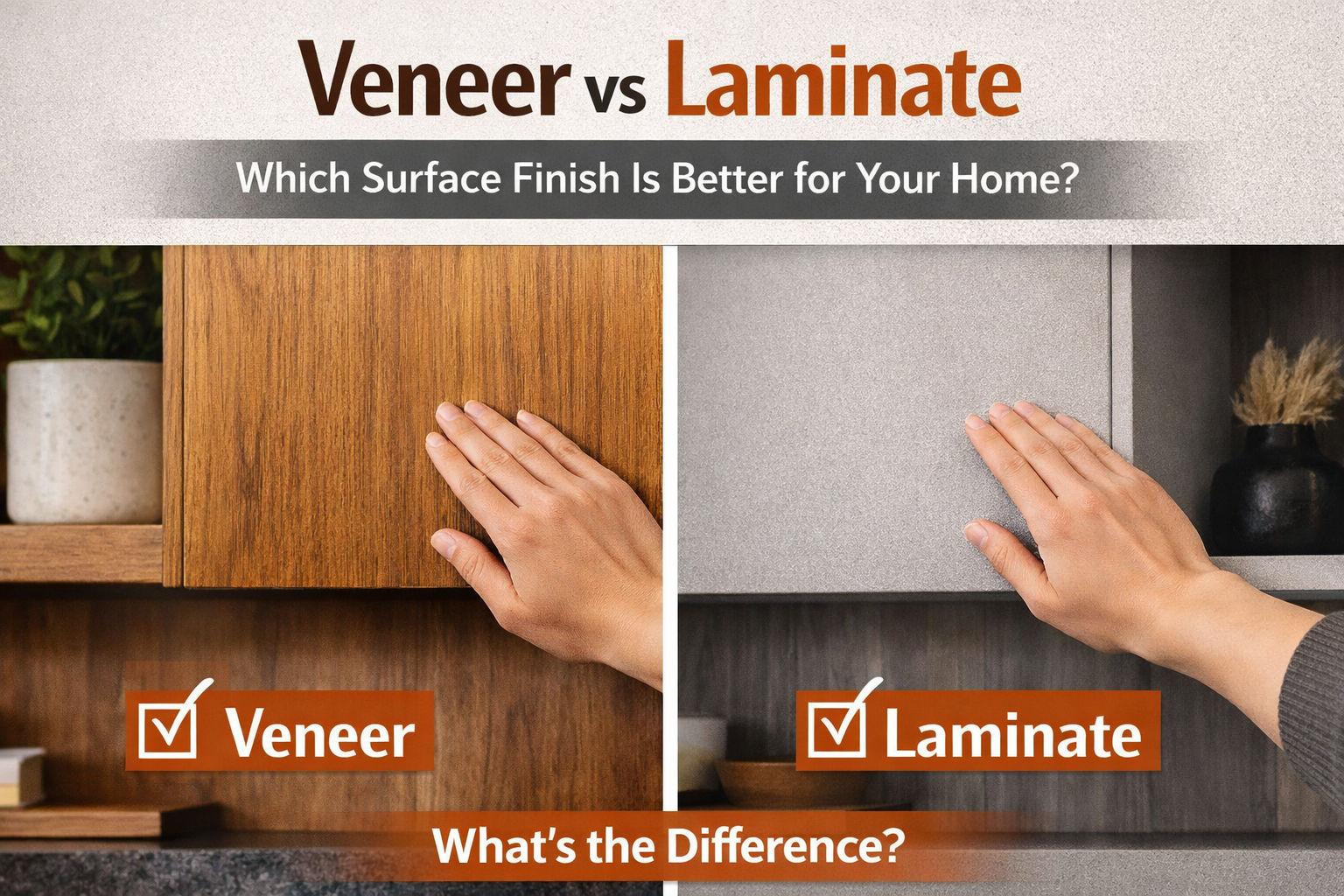
 If you have ever sat across the table from a carpenter or an interior designer and heard them throw around words like 'veneer' and 'laminate,' you know exactly how confusing this decision can feel. Both materials look great in the showroom. Both promise to make your furniture look premium. But the moment you dig a little deeper, the differences between veneer vs laminate start to matter a lot, especially if you are working on kitchens, wardrobes, or high-use areas in an Indian home.
This guide breaks it all down in plain language. No jargon overload, no confusing charts. Just an honest, practical comparison so you can make a decision you will not regret six months down the line.
What Are Laminate and Veneer? Let's Start with the Basics
What Is a Laminate Finish?
Laminate is an artificial surface material made by pressing together multiple thin layers of flat paper and plastic resins under very high temperature and pressure. In India, it is commonly called Sunmica, a brand name that has become a generic term, similar to how we call all photocopies 'Xerox.'
The topmost layer carries a decorative print, which could mimic wood, stone, leather, or even fabric. A clear plastic coating over that print gives laminate its characteristic shiny or matte look. High Pressure Laminate (HPL) and Low Pressure Laminate (LPL) are the two main types, with HPL being far more durable for everyday furniture.
What Is a Veneer Finish?
A veneer is a thin slice of real hardwood, typically 0.5 mm to 3 mm thick, that is glued onto a substrate like plywood, MDF, or particle board. Because it uses actual wood, no two veneer sheets look identical. Each piece carries its own grain pattern, knots, and natural character.
Veneers can be categorised into raw veneer, paper-backed veneer, phenolic-backed veneer, reconstituted veneer, and wood-on-wood veneer, each serving different purposes in furniture and cabinetry work.
Laminate vs Veneer: A Quick Comparison at a Glance
| Aspect | Veneer | Laminate |
|---|---|---|
| Definition | Thin real wood layer on plywood or MDF | Paper and resin layers mimicking wood |
| Appearance | Unique grain, warm and natural look | Uniform patterns, wide colour variety |
| Durability | Moderate; can be refinished | High; scratch and stain resistant |
| Water Resistance | Low (needs melamine coat) | High |
| Heat Resistance | Low | High |
| Maintenance | High (periodic polishing) | Low (just wipe clean) |
| Cost | Higher | More affordable |
| Eco-Friendliness | Biodegradable, sustainable | Less eco-friendly |
| Best For | Statement furniture, living areas | Kitchens, wardrobes, offices |
Laminate vs Veneer: Aesthetics and Design Options
When it comes to looks, veneer wins hands down for natural beauty. Since each sheet is sliced from real wood, every piece is unique. The grain patterns, colour variations, and natural depth give veneer furniture that warm, rich feel you simply cannot replicate with a printed surface.
Laminates, on the other hand, offer an almost unlimited range of colours, finishes, and textures. From high gloss to matte, from wood grain prints to stone and fabric textures, the variety is staggering. Because they are mass-produced, though, you might find the same laminate sheet in a dozen different homes on your street.
One notable advantage of modern laminates is that printing technology has gotten very good. High-end laminates can look remarkably close to real wood from a distance. But if you run your fingers over the surface, the difference in tactile quality is immediately clear.
Compare the Durability of Laminate and Natural Wood Veneer
This is where laminate pulls well ahead. Laminates, especially HPL (High Pressure Laminate), are highly resistant to scratches, stains, heat, and moisture. You can wipe them down with a wet cloth, place hot cups on them, and still expect them to look the same years later.
Veneer is much more sensitive. The thin wood layer can scratch easily. Prolonged exposure to water can cause the veneer to swell, bubble, or peel away from the substrate. Heat from direct sunlight or hot objects can loosen the resin glue underneath and lead to discolouration.
That said, veneer has one big advantage that laminate does not: it can be repaired. If a veneer surface gets scratched or worn out, you can sand it down and polish it back to its original look. Laminate, once chipped or cracked, cannot be repaired and must be replaced entirely.
Laminate vs Veneer: Maintenance
Laminate is the clear winner for low maintenance. A damp cloth or mild soapy water is all you need to keep a laminate surface looking clean and new. It does not need periodic polishing and retains its look for many years without much effort.
Veneer requires more care. You need to polish veneer surfaces from time to time to maintain their finish. Spills must be wiped immediately because moisture can seep under the veneer layer and cause long-term damage. Keeping veneer furniture away from direct sunlight is also important to prevent fading.
Is Laminate or Veneer Better for Kitchen Cabinets in Indian Homes?
For kitchens, laminate is almost always the better choice. Indian kitchens deal with a lot of heat, moisture, oil, and daily wear. Laminate handles all of this far better than veneer.
Veneer in a kitchen is a risky bet. The humidity from cooking, steam from pressure cookers, and the occasional water splash are exactly the conditions that cause veneer to loosen and bubble. Unless you apply a melamine coating on the veneer surface to make it waterproof, it is not well-suited for kitchen use.
For kitchen cabinets, opt for High Pressure Laminate (HPL). It is tough, water-resistant, easy to clean, and available in finishes that look just as good as veneer from across the room.
Which Material Is More Cost-Effective for Wardrobe Finishes?
For wardrobes, the answer depends on your budget and how long you plan to live in the space.
Laminate is the more cost-effective choice for wardrobes in rented homes or practical, everyday setups. It is affordable, durable, and requires almost no maintenance. Most rental homes use laminate for exactly this reason.
If you are doing up your own home and want your wardrobe to look like a statement piece, veneer adds an unmistakable richness. The higher upfront cost is offset by the fact that it can be refinished instead of fully replaced when it starts to show age.
As a rough guide, laminate sheets in India are typically priced between Rs. 800 to Rs. 2,500 per sheet, while good quality veneer can cost anywhere from Rs. 1,500 to Rs. 5,000 or more depending on the wood species.
Resistance to Heat and Water: A Critical Factor for Indian Homes
India's climate can be harsh on furniture. Humidity, monsoons, and extreme temperatures are all factors that must go into your material choice.
Laminate vs Veneer: Resistance to Heat
Laminates have significantly higher heat resistance than veneer. They can withstand moderate heat without warping or discolouration. However, if exposed to extreme heat over a long period, they can still get damaged.
Veneer is pasted using resin glue, which can loosen when exposed to heat. Keeping veneer furniture away from direct sun and heat sources is essential.
Laminate vs Veneer: Resistance to Water
Laminates are waterproof by nature, which is why they are preferred in kitchens and bathrooms. Veneer, being a natural wood product, is porous and can absorb moisture if not properly sealed. A melamine coating can make veneer waterproof, but it adds to the cost.
Laminate vs Veneer in Terms of Sustainability
If environmental impact matters to you, veneer has a clear advantage. Veneer uses real wood from natural sources and, when sourced responsibly, is a sustainable material. It is also biodegradable, which means it does not add to landfill problems.
Laminate is made from resins, plastics, and adhesives that are not eco-friendly. They do not decompose easily and contribute to plastic waste over time. For anyone trying to make greener choices in their construction or interiors work, veneer is the more responsible option.
Which Companies in India Offer Quality Laminate and Veneer Products?
India has a well-developed market for both laminates and veneers. Here are some well-known names to look at:
Laminate Brands in India
• Greenply Industries: One of the most trusted names for plywood and laminates
• Century Laminates: Known for durable HPL in a wide range of finishes
• Merino Industries: Popular for its consistent quality and wide colour palette
• Formica India: A global name with strong presence in the Indian market
• Royale Touche: Known for decorative laminates with premium finishes
Veneer Brands and Suppliers in India
• Greenlam Veneers: A leading name for natural and reconstituted veneers
• National Plywood Industries: Offers both plywood and veneer products
• Archidply Industries: Well known for quality wood-based panels and veneers
• CenturyPly: Also offers veneer products alongside their laminate range
Laminate vs Veneer: Utility and Best Applications
Understanding where each material performs best helps you make smarter decisions on site.
Use laminate for: kitchen cabinets, bathroom vanities, children's bedrooms, office furniture, study tables, wardrobes in high-use areas, and any surface that sees daily wear, heat, or moisture.
Use veneer for: living room entertainment units, dining tables, decorative cabinets, bedroom furniture used as focal points, bar units, and statement pieces where the natural look of wood matters more than everyday practicality.
Veneer vs Laminate: Which One Should You Choose?
There is no single right answer, and that is actually the most honest thing to say. Both materials serve different purposes and both can look stunning when used correctly.
Choose veneer if you want the timeless warmth of real wood, are willing to invest in regular maintenance, and are placing the furniture in an area that is not exposed to heavy moisture or heat. Veneer is ideal for homes where aesthetics are the priority and the furniture will be treated with care.
Choose laminate if you need a practical, low-maintenance, and cost-effective surface for areas that take a beating every day. Laminate is the smarter choice for kitchens, rented spaces, and high-use furniture.
For most construction and interior projects in India, the smartest approach is a combination of both: laminate for functional areas like kitchens and wardrobes, and veneer for statement pieces in living and dining spaces.
Frequently Asked Questions (FAQs)
What are the key differences between laminate and veneer?
The main difference is in the material. Veneer is made from thin slices of real wood, while laminate is an artificial product made from paper and plastic resins. This difference affects aesthetics, durability, maintenance needs, cost, and environmental impact.
What are the differences between laminate and veneer for furniture?
For furniture, veneer gives a unique, natural look with warm grain patterns and can be refinished when damaged. Laminate offers consistent patterns, is more durable, easier to clean, and less expensive. Your choice should depend on where the furniture will be used and how much maintenance you can do.
Pros and cons of laminate versus veneer for kitchen cabinets
Laminate pros for kitchens: waterproof, heat-resistant, scratch-resistant, easy to clean, and affordable.
Laminate cons: cannot be repaired if chipped, patterns are repetitive.
Veneer pros for kitchens: natural beauty, unique grain patterns, can be refinished.
Veneer cons: not naturally waterproof, sensitive to heat and humidity, requires regular maintenance, and is more expensive.
Is laminate or veneer better for kitchen cabinets in Indian homes?
Laminate, specifically High Pressure Laminate (HPL), is better for kitchen cabinets in Indian homes. The heat, steam, and moisture in a typical Indian kitchen are tough on veneer. Laminate handles these conditions far better and requires minimal upkeep.
Which is more costly, veneer or laminate?
Veneer is generally more expensive than laminate. The cost of veneer depends on the type of wood species used. Laminate is mass-produced and more affordable, making it the go-to choice for budget-conscious projects.
What is more durable, veneer or laminate?
Laminate is more durable in terms of resistance to scratches, stains, water, and heat. Veneer is less durable but can be restored by sanding and polishing, which laminate cannot.
How can you tell the difference between laminate and veneer?
The easiest way is to feel the surface and look at the grain pattern. Veneer will have slight variations in grain and a tactile warmth because it is real wood. Laminate will feel smoother and the grain pattern will repeat uniformly. You can also check the edges: veneer usually shows the substrate material on the edges, while laminate has a clean, sealed edge.
Are veneers high-maintenance?
Yes, relatively. Veneer surfaces need periodic polishing to keep their finish looking good. They are sensitive to moisture, heat, and sunlight, so they need to be cleaned quickly after spills and kept away from direct sun.